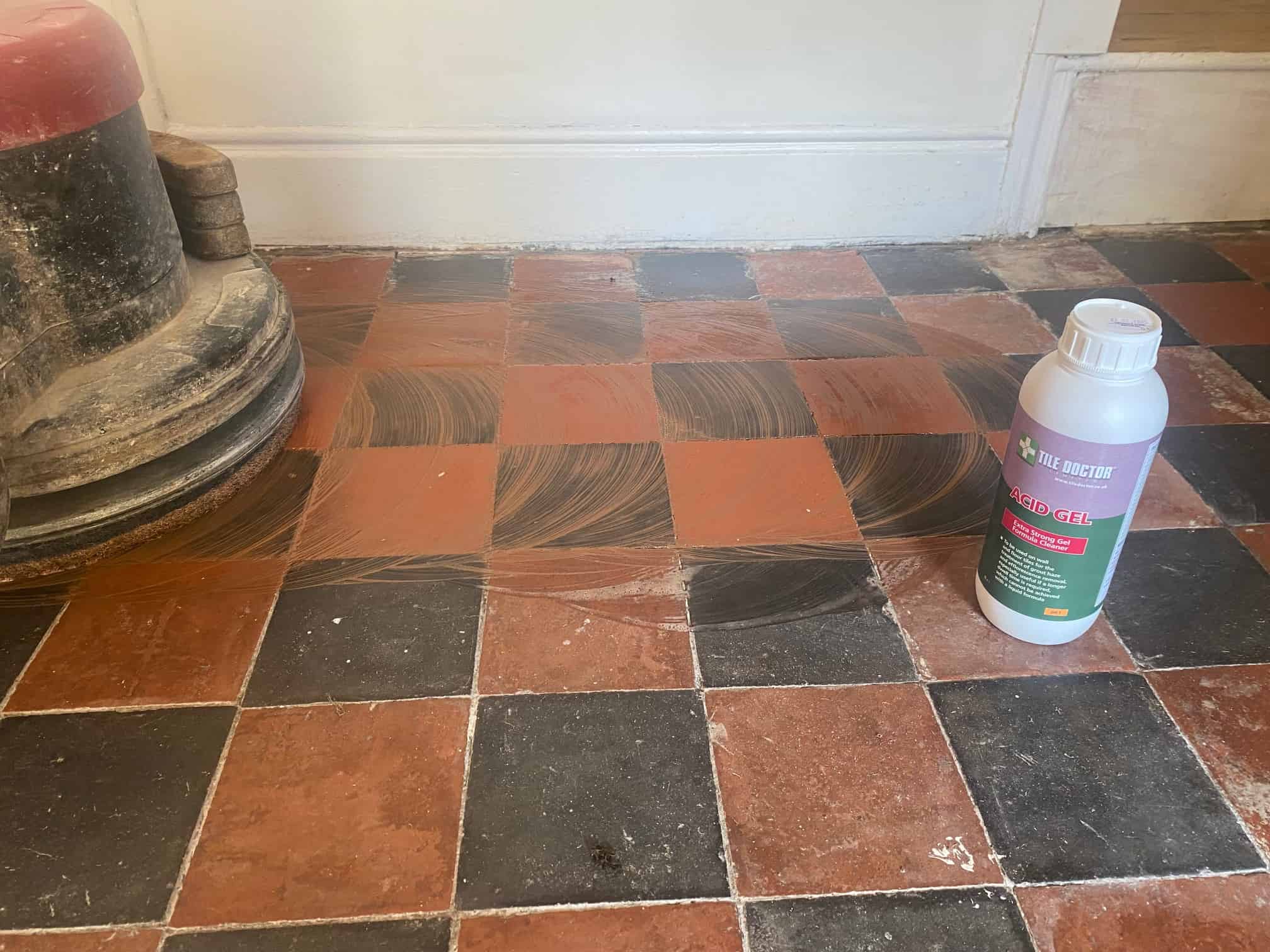
Victorian Tile Cleaning

Victorian Encaustic Tiled Hallway Floor Restoration Lancaster

Victorian Encaustic Tiled Hallway Floor Renovation in Lancaster

Below is a great example of what we typically do to a restore an old Victorian tiled floor. This particular floor was installed in the hallway of at a house in Lancaster circa 1890 and now 135 years later it was still in place but the years had taken its toll with multiple damaged tiles needing replacement and some had been replaced with cement.

Victorian Tiled Hallway Before Restoration Lancaster Victorian Tiled Hallway Before Restoration Lancaster

The floor was laid in an attractive geometric pattern with lovely detailed encaustic tiles with a rose at the centre of the pattern. These encaustic tiles will have been specially created with compressed cement and whilst we can usually source replacement Victorian tiles the encaustic tiles were custom made and very rare. The only way to find replacements for them would be by trawling reclamation yards or having them specially made at great expense. Fortunately, in this case most of the encaustics were still in good condition which is a testament to the Victorians.

Repairing a Damaged Victorian Tiled Hallway Floor

Before cleaning the floor needed a lot of work to remove the damaged tiles and areas were tiles had been substituted for concrete. This involved using a hammer and chisel to carefully remove the old tile and then clean up the debris. This is delicate work as too much force can lead to more tiles popping out and making the whole project bigger.

Victorian Tiled Hallway During Restoration Lancaster Victorian Tiled Hallway During Restoration Lancaster

When the floor was ready new tiles were cut to fit the existing pattern and set in place using a rapid set adhesive. It was also necessary to reset quite a lot of tiles that had become loose. The tiles were then grouted in using a coloured grout to match the rest of the floor. They didn’t use grout back in the Victorian period, it was just cement fortunately I was able to replicate this perfectly.

Cleaning a Victorian Tiled Hallway Floor

When the tiles were set and the whole floor was solid, we were able to move onto the cleaning. This started with the application of Tile Doctor Oxy-Gel worked in with a 200-Grit Milling pad fitted to a rotary buffer. I recommend gel cleaners for this work as they use less water and excessive use of water on an old floor that doesn’t have a damp proof course will take much longer to dry out. After being scrubbed in the gel released the dirt from the tiles which was then rinsed off and vacuumed away with a wet vacuum.

Next step was to give the floor an acid rinse using Tile Doctor Acid Gel scrubbed in with a deck brush. The acid gel further cleans the tiles, removes old grout smears, counters efflorescent salts and neutralises the floor after the use of Oxy-Gel which is alkaline. After another rinse and vacuum the process was repeated in the edges and corners using handheld diamond blocks.

Victorian Tiled Hallway During Restoration Lancaster Victorian Tiled Hallway During Restoration Lancaster

Once the tiles were dry, I used a Burr Line pad fitted to a rotary buffer to further improve the appearance of the tiles. Often referred to as magic pads they are really good at finishing off the cleaning and is applied using only water.

Sealing a Victorian Tiled Hallway Floor

The floor was left to dry fully overnight and we called back then next day to seal the floor. Two coats of Tile Doctor Colour Grow sealer were used for this which did a great job. It doesn’t give a shiny finish but the formula contains a colour enhancer that really lifts the colours in the clay. This sealer is also fully breathable which is important when sealing a floor that has no damp proof course as it will allow any moisture from the foundation to rise through the tile.

Victorian Tiled Hallway After Restoration Lancaster Victorian Tiled Hallway After Restoration Lancaster

I think you will agree the floor was completely transformed by the work and the new sealer should keep it looking that way for some time to come. For aftercare cleaning I recommended the use of a Neutral PH cleaning product such as Tile Doctor Neutral Clean.

Victorian Tiled Hallway After Restoration Lancaster


Professional Restoration of a Victorian Encaustic Tiled Hallway Floor in Lancashire

Victorian Encaustic Tiled Hallway Floor Renovation in Lancaster Read More »

Red And Black Victorian Tiled Floor Dorchester Pattern Restoration Lancaster

Dorchester Pattern Victorian Tiled Hallway Floor Restoration in Lancaster

This is a Red and Black Victorian tiled floor laid in a Dorchester pattern at a property in Lancaster. The owner has only just bought the property which dates to the 1890s and this floor had previously been covered in carpet which had started to smell and leave a pungent aroma in the air.

Red And Black Victorian Tiled Floor Dorchester Pattern Before Cleaning Lancaster

Once the carpet had been removed and the Victorian floor allowed to breathe and dry out the smell disappeared. This is the right course of action with old floors which were laid without a damp proof membrane, floors of this age need to breathe and allow moisture to rise through the tile and evaporate at the surface, carpets and underlay prevent this.

Red And Black Victorian Tiled Floor Dorchester Pattern Before Cleaning Lancaster

The damp issues had resulted in efflorescent salts being deposited on the surface of some of the tiles and this is an important consideration when cleaning the floor. Salts and damp go together, so the more water we use the more salts will come through after the floor has been cleaned. Additionally using an alkaline cleaner such as Tile Doctor Pro Clean or Remove and Go this will further increase the alkalinity of the floor and cause yet more salt issues so a different approach is required.

Cleaning a Victorian Tiled Hallway Floor

Naturally I didn’t want to exacerbate the moisture problems by using liquid products to clean the floor, so I used a low, moisture cleaning technique. This involves applying Tile Doctor Acid Gel as the main cleaning agent and working it in with a 200-grit milling pad fitted to a rotary machine. The gel keeps the moisture level low, and it is a very effective cleaning product and being an acid will neutralise the salts in the floor and keep the pH level at the correct balance. Once done the floor was briefly rinsed with water and all the soils extracted with a wet vacuum.

Red And Black Victorian Tiled Floor Dorchester Pattern During Cleaning Lancaster

The floor was left to dry off overnight then I called back the following day to see how it had faired. There were some areas where efflorescent salts had appeared, so I spot treated these areas with more Acid Gel and then scrubbed and rinsed with water using the wet vacuum again to remove as much moisture as possible. You will see on the photos how soft the salt was and I was able to scrape it off without too much difficulty, however if left untreated this salt would harden into a crystalline structure and become more difficult to remove.

Red And Black Victorian Tiled Floor Dorchester Pattern Efflorescencent Salt Removal Lancaster

Sealing a Victorian Tiled Hallway Floor

To make sure the sealer would cope with the damp floor I applied a thin coat of Tile Doctor X-Tra Seal to several areas before leaving. The decision on which type of sealer to apply was influenced by the damp issues as the moisture needs to be able to evaporate at the surface, so it is important to select a fully breathable sealer.

Red And Black Victorian Tiled Floor Dorchester Pattern After Cleaning Lancaster

I called back the following day and the floor was more settled, and the sealer had fully cured, the client gave his thumbs up and we continued sealing the floor with one coat of Tile Doctor X-Tra Seal which is fully breathable.

Red And Black Victorian Tiled Floor Dorchester Pattern After Cleaning Lancaster

Once completed the floor was transformed and worked well with other period features in the property. For aftercare cleaning I recommended the use of a Neutral PH cleaning product such as Tile Doctor Neutral Clean.


Professional Restoration of a Victorian Tiled Hallway in Lancashire

Dorchester Pattern Victorian Tiled Hallway Floor Restoration in Lancaster Read More »

Victorian Tiled Lobby Floor Restoration Lytham St Annes

Victorian Tiled Lobby Floor Rebuild in Lytham St Annes

I visited this property in Lytham St Annes to survey a small Victorian tiled lobby which was in a sorry state. The client was keen to have it restored and wanted to know if it was possible. I discussed with them what we could do, and I gave them a quote for the work. Although it was only a small lobby, I could see the job could be quite involved and would be subject to the replacement tiles which I was confident we could source.

Victorian Tiled Lobby Before Rebuild Lytham St Annes

Repairing a Victorian Tiled Lobby Floor

This is one of those jobs you wish you hadn’t started as there were a lot more tiles to remove than anticipated and it mushroomed into replacing half the floor. Once the area was cleaned up, I applied a self-levelling compound to bring up the height of the base.

Victorian Tiled Lobby During Rebuild Lytham St Annes

Once the levelling compound had set, I was able relay the Victorian tiles using a combination of original tiles and replacements which had to be cut to shape. Cutting tiles to fit is quite intricate and time-consuming work especially when you consider new tiles are all metric in size and a 2mm difference becomes very telling after a foot or so! My solution was to use 150 mm tiles which are the biggest the stockist offers and then cut them down on my Rubi cutter using a template made from the original tiles. This the only way I could get it to look tight, it takes longer but it makes for a thorough job and a better finish.

Victorian Tiled Lobby During Rebuild Lytham St Annes

I always use flexible floor adhesive when laying tiles, my preference is Keraquick Grey from Mapei. There are other brands off course but this one is quite easy to get hold of and as the term grouting is a relatively modern invention (in the past it was called pointing ) I find it looks right with this type of tile and similar to the screed cement the Victorians used in the past.

Deep Cleaning a Victorian Tiled Lobby Floor

After the tiling had been completed, I left the floor to cure and fully dry and returned at a later date to give the floor an overall clean. For this I ran a coarse 200-grit diamond floor pad across the floor lubricated with water and used handheld diamond blocks for the edges where the pad can’t reach. The slurry was rinsed off with water and extracted with a wet vacuum.

With old floors like this, which don’t have a damp-proof membrane installed under the floor, efflorescence is always a concern and can lead to white salts appearing on the surface of the tile as moisture rises through the floor. To counter this, I finished cleaning the floor by scrubbing it with Tile Doctor Acid Gel. This was then rinsed off with water and the soil extracted using a wet vacuum.

Sealing a Victorian Tiled Lobby Floor

The client was happy to seal the floor themselves (they wanted to save some money and it wasn’t a big area) so I supplied them with a bottle of Tile Doctor Colour Grow. I recommended this sealer as it will enhance the dark colours and being fully breathable it will cope with any moisture rising through the base. I recommended they apply two coats to start leaving time to allow the first coast to dry they could also then decide to leave it at that if they were happy with the finish.

Victorian Tiled Lobby After Rebuild Lytham St Annes


Professional Restoration of a Victorian Tiled Hallway in Lancashire

Victorian Tiled Lobby Floor Rebuild in Lytham St Annes Read More »

Scroll to Top